What Is an East-Only Mahjong Game? Basic Rules and Match Flow
Published
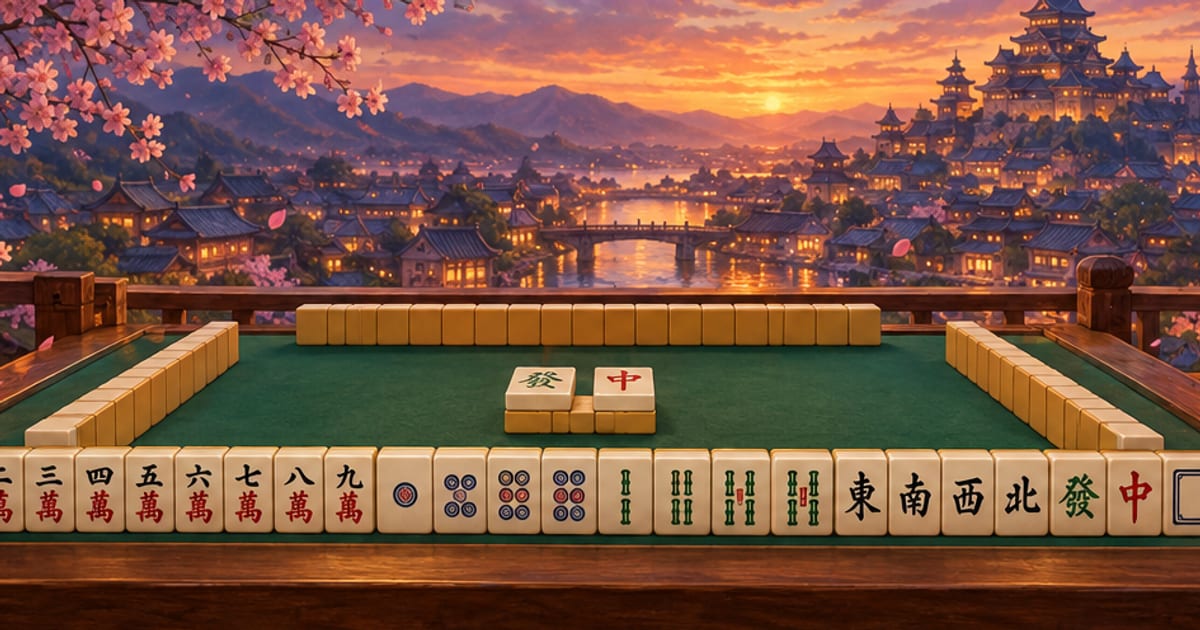
For beginners who have just started learning mahjong, this guide clearly explains how a basic match format works: what is an East-only game in mahjong.
What Kind of Match Format Is an East-Only Mahjong Game?
An East-only game is a match format played from East 1 to East 4. The dealer, who serves as the facilitator, rotates to all players 1 time each. Because it concludes after 1 full round, its major feature is allowing players to focus and settle the match in a short time.
In 4-player Japanese riichi mahjong, each player starts the match with 25,000 points. The dealer turn rotates in order, and the final ranking is decided by the total score when East 4 finishes. Because there are fewer hands, losing or gaining points in any 1 hand directly impacts the outcome, demanding calm point management right from the opening.
Play in the app
Putting concepts into practice is the quickest way to learn. Play thoroughly on your own against computers even without an internet signal.


Free to play. Contains ads. No in-app purchases.
The Basic Winning Hand Shape and Yaku Requirements
To win (win = completing a hand and claiming victory) in mahjong, you must assemble a set pattern. The basic shape consists of 14 tiles in total: 4 sets of 3-tile sets (set = consecutive numbers or identical tiles) and 1 pair of 2-tile pairs (pair = head of 2 identical tiles).
However, assembling the shape alone does not let you win. Mahjong features a one-han minimum rule requiring at least 1 yaku. Furthermore, dora tiles, which increase your score, are not a yaku; you cannot win with dora alone.
- Hand composition: 4 sets of 3 tiles + 1 pair of 2 tiles
- Yaku requirement: At least 1 yaku is required, such as riichi or yakuhai
- Note on dora: Increases score but does not count as a yaku
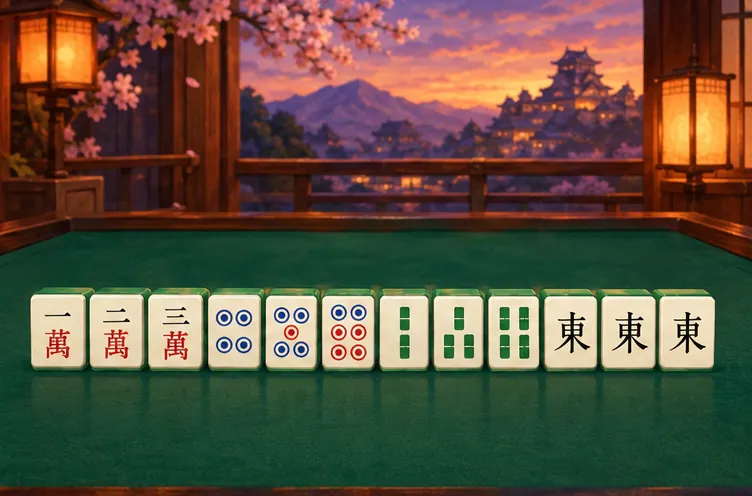
Figure 1 as text
Hand: 2m 2m 2m 3m 4m 3p 4p 5p 2s 3s 6s 7s 8s
Tsumo win: 4s
Waits: 1s, 4s
Notation: 22234m345p23678s win 4s
In the diagram, alongside a pair of 2 characters, 4 sets across characters, circles, and bamboo are assembled. It depicts a hand winning by tsumo on 4 bamboo from a wait on 1 bamboo and 4 bamboo. Arranging a total of 14 tiles into 4 sets of 3 tiles and 1 pair of 2 tiles is the standard winning structure.
Progressing the Game with Riichi and Calling
Figure 2 as text
Hand: 2m 3m 4m 4m 5m 6m 6p 7p 8p 2s 2s 4s 5s
Waits: 3s, 6s
Notation: 234456m678p2245s
When your closed hand (holding tiles without taking discards from others) forms a pair of 2 bamboo and full sets, reaching tenpai (1 tile away from winning) waiting on 3 bamboo and 6 bamboo like in the diagram, you can declare riichi by placing a 1,000-point deposit on the table. Declaring riichi gives you a yaku by itself, and winning opens an opportunity to gain ura-dora.
On the other hand, calling such as pon and chii to use another player's discard helps complete your hand faster. However, be aware that you cannot declare riichi or earn closed-hand-only yaku.
In the mahjong title Jankokushi, you can play alone against computers, and turn time limit starts at "None" (adjustable to 15 or 30 seconds). Even without signal, you can calmly test your calls and yaku-building decisions in East-only games.
Frequently asked questions
What is the difference between an East-only game and an East-South game?
An East-only game is a short format concluding by East 4. In this game's 4-player Japanese riichi mahjong, each player starts with 25,000 points, playing until East 4 where the dealer rotates 1 round. It takes less time than other formats like East-South games, making it easy to enjoy on a smartphone.
Can you win in an East-only game without a yaku if you hold dora?
You cannot win with dora alone. This game's rules enforce a one-han minimum, requiring at least 1 yaku to win (win = completing a hand and claiming victory). Dora adds bonus points to your hand, but because it is not recognized as a yaku itself, you must assemble another yaku such as riichi or yakuhai.
Can you change your hand after declaring riichi?
You cannot change your hand after declaring riichi. Drawn tiles must be discarded as tsumogiri; closed quads (collecting 4 of the same tile) are allowed only if they do not change your wait. Therefore, it is essential to decide firmly which tile to wait on before declaring riichi.
Does calling (pon or chii) prevent you from declaring riichi?
Calling prevents you from declaring riichi. To declare riichi, you must be in tenpai (1 tile away from winning) with a closed hand without taking other players' discards. Calling with pon or chii breaks your closed hand, so you must form a yaku other than riichi.
Play in the app
Sit at the table with Three Kingdoms figures and test your yaku and riichi skills in the mahjong RPG Jankokushi.
Free to play. Contains ads. No in-app purchases.